
Bitcoin Holds $65K Amid Geopolitical Turmoil
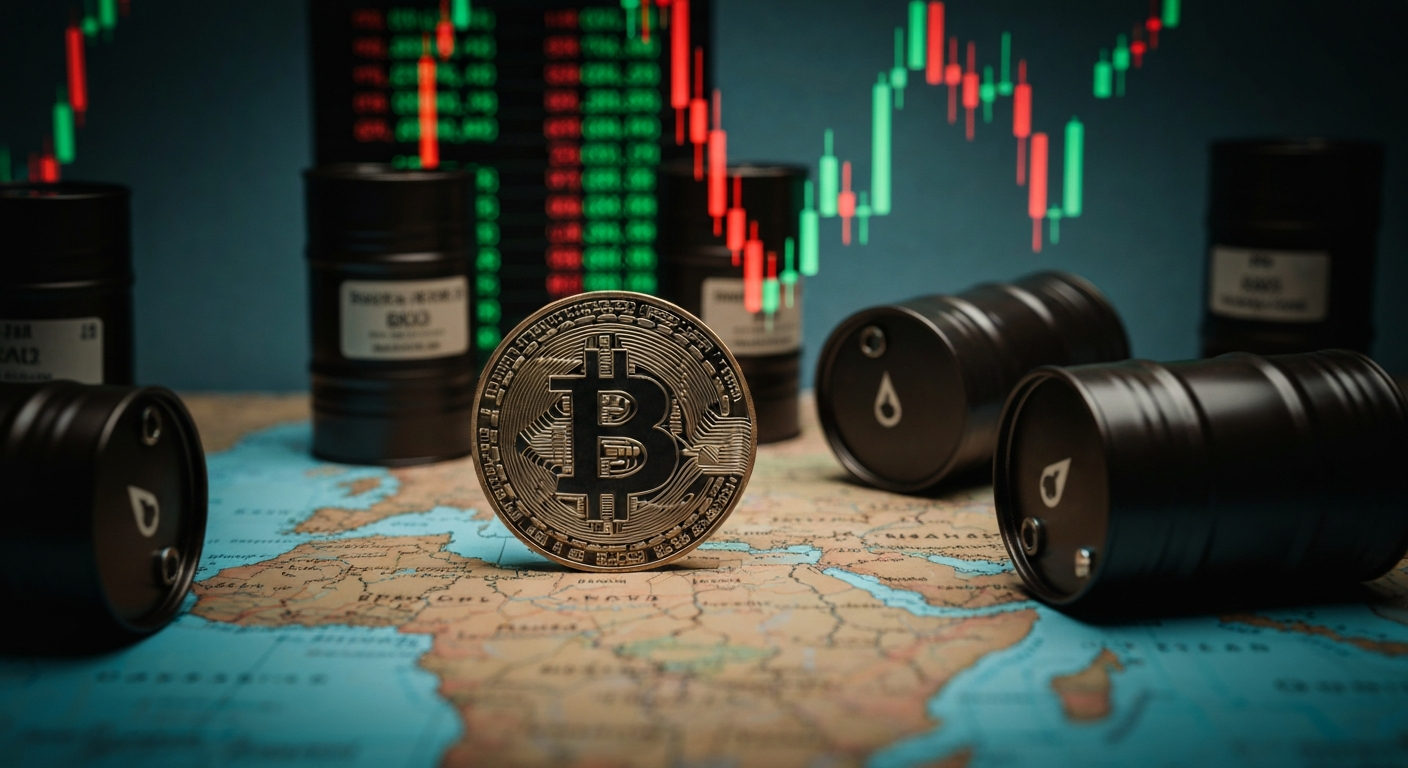
Bitcoin (BTC) demonstrated resilience, holding the $65,200 level despite significant geopolitical headwinds stemming from the Middle East. This price action prompts the critical question: is this a genuine ‘geopolitical floor,’ or merely a temporary pause in a downturn? Asian markets, in particular, experienced a sharp risk-off sentiment, with major indices dropping over 3% as Brent crude surged to $115 per barrel, mirroring the immediate reaction to the Houthi’s involvement in regional conflicts.
Asian Market Signals: Beyond the Headlines
While global news focused on the conflict, Asian institutional players and tech firms reveal deeper undercurrents. OpenEdge Technology, a KOSDAQ-listed firm, secured 20 billion KRW (approx. $15 million USD) through a third-party rights offering. This move, aimed at securing operational funds, highlights a common strategy in the region to bolster growth, often signaling confidence in future technological development despite market volatility. Investors should note that such capital injections, especially when earmarked for technology like AI semiconductors (OpenEdge’s specialty), can prefigure future industry trends that global markets might later adopt.
Meanwhile, the DeFi protocol Aave launched its V4 upgrade on the Ethereum mainnet. This upgrade introduces a ‘hub-and-spoke’ model, fundamentally altering loan structures by separating liquidity from individual markets. With Aave managing $24 billion in total value locked (TVL), this innovation addresses the ‘liquidity fragmentation’ issue in DeFi, potentially setting a new standard for decentralized lending protocols globally. Asian developers are often at the forefront of such infrastructure upgrades, setting precedents that influence worldwide DeFi adoption.
Separately, American Bitcoin (ABTC), a US-based reserve company, surpassed 7,000 BTC in holdings, marking a significant increase of threefold in under seven months. Despite this asset growth, its stock price has plummeted 88% over six months. This divergence is a crucial Asian market signal: while direct Bitcoin accumulation by corporate entities is rising (a trend closely watched by Korean crypto-focused firms), investor sentiment towards publicly traded crypto-adjacent companies remains cautious, driven by factors beyond pure asset holdings.
South Korea’s government, acknowledging the instability, convened a meeting to discuss economic countermeasures to the Middle East conflict. The emphasis on maintaining macroeconomic and financial stability, alongside thorough supply chain analysis for energy and raw materials, reflects a proactive stance that could offer insights for other economies navigating similar challenges.
What to watch: Investors should monitor whether Bitcoin’s $65,000 support level holds as a true floor or if the geopolitical risks continue to pressure risk assets. The performance of Asian tech firms raising capital and DeFi protocol upgrades like Aave’s V4 will be key indicators of underlying technological and market resilience.
Disclaimer: This article is for informational purposes only and does not constitute financial advice. Always do your own research (DYOR) before making investment decisions.